Google Home Speaker: Gemini Finally Makes It Smart
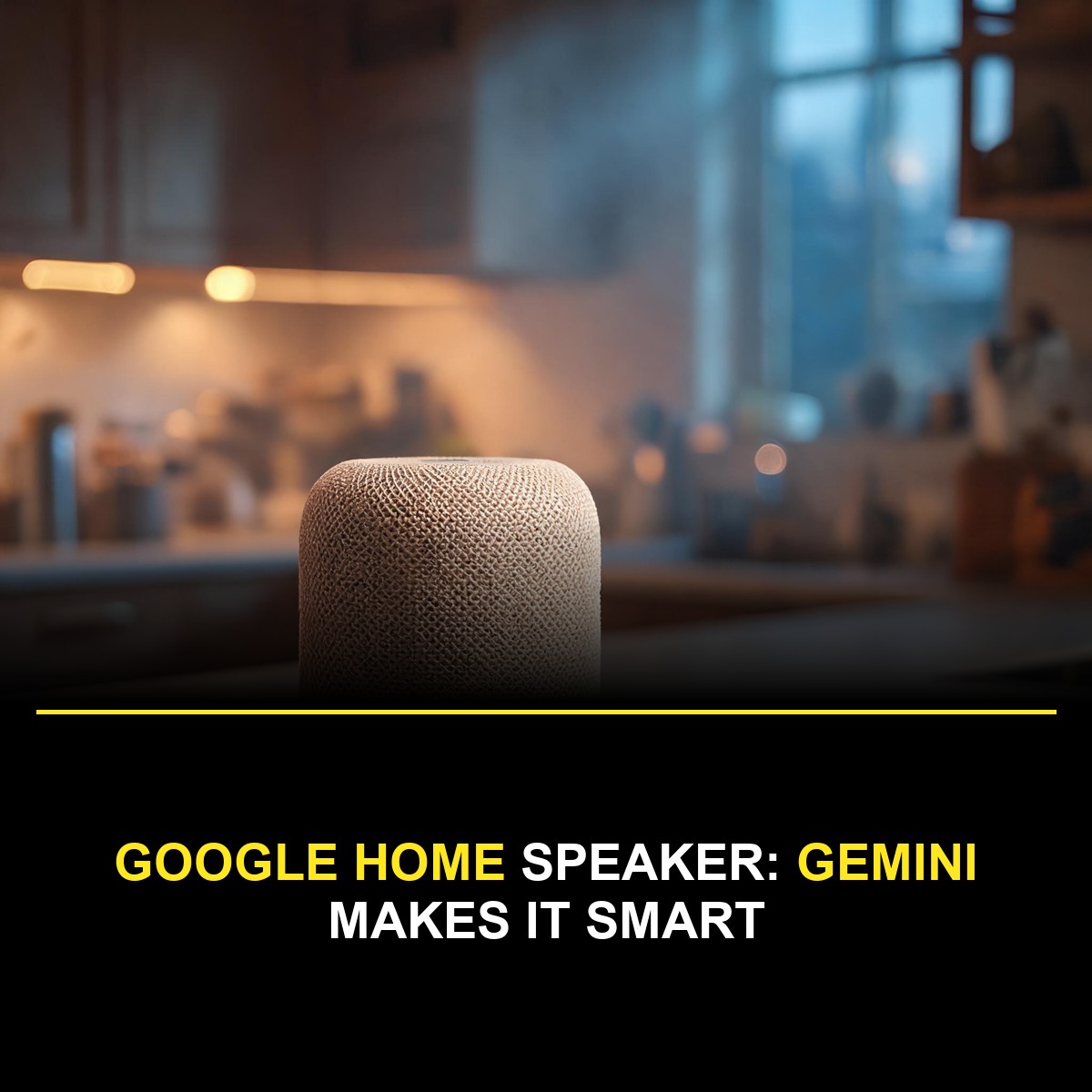
The Google Home Speaker costs 99.99 dollars and anchors the Gemini for Home lineup, runs the Gemini for Home voice assistant, and represents the first audio device built from scratch for Gemini rather than retrofitted with it. Announced in June and shipping through the year, it enters the holiday season as the test case for a question the smart speaker industry has been avoiding for two years: can a large language model actually make a countertop cylinder useful again?
The category the Google Home Speaker enters has been in decline since roughly 2021. Smart speakers were sold as assistants and delivered as timers, and the conversation model they ran on could not follow a sentence with two clauses in it. Google replaced its entire voice stack with Gemini, and the Google Home Speaker is the hardware built to show what that changes: natural language understanding, mid-sentence corrections, multi-command processing, and conversational memory that follows a thread without repeating a wake word.
The catch is that the best features sit behind a subscription, and the entry price quietly doubled what Google charged for its cheapest speaker two years ago. Both facts shape who this device is actually for.
This article covers what Gemini for Home changes in practice, what the Google Home Premium subscription adds, how the hardware performs, what the review consensus says, how the pricing lands against Amazon's Alexa+ strategy, and which buyers should spend the money.
What Gemini changes in the Google Home Speaker
The voice assistant improvements are the product, and they are measurable in the kinds of sentences a speaker can now handle.
Multi-command processing means one utterance can set three actions in motion: dim the kitchen lights, play relaxing music, and start a 20-minute timer, all parsed correctly in a single breath. Self-correction means the speaker handles the way people actually talk, so a command interrupted and reversed mid-sentence, turn off the coffee maker, meant turn it on, executes the final intent rather than the literal first clause.
Reasoning across steps handles the composite questions that defeated the previous generation: asking about weather for a favorite team's next game requires the model to determine when the game is, where it is held, and what the forecast says for that place and time, then compose one answer. Conversational memory means follow-up questions inherit context, so asking about a podcast and then asking for one with shorter episodes works without restating the topic.
Continued Conversation, which keeps the microphone briefly open after a response so follow-ups do not need a wake word, now works in all supported languages for the first time. Ten new voices ship with the assistant, designed to sound more natural than the synthetic voices of the previous generation.
None of these features are novel in the abstract. Large models do all of them. What is novel is their presence on a device that costs under a hundred dollars and responds in a home context, where latency, microphone quality, and reliability matter more than raw capability.
The Google Home Speaker subscription wall
The best capabilities require Google Home Premium, and the split between what is included and what is paid is the most consequential design decision in the product.
Included with the Google Home Speaker is the Gemini for Home voice assistant in full conversational form, which covers natural commands, multi-step reasoning, and device control. Behind the subscription sit Gemini Live, the free-flowing conversational mode where users can brainstorm, change topics, and interrupt; Camera History Search, which answers questions about recorded Nest camera activity, such as whether the back gate is open or whether the dog got on the couch; and Home Briefs, summaries of what happened at home while the user was away.
That Google Home Speaker structure follows the industry's move from hardware margin to recurring revenue, and Amazon made the same turn with Alexa+, its subscription assistant. The economics are visible in the pricing: hardware sold near cost, intelligence sold monthly, and the features that differentiate the product gated behind the annuity rather than included in the box.
The honest assessment is that the free tier is good enough for most speaker tasks and the subscription is where the genuinely new capabilities live. Camera History Search is the strongest reason to subscribe for households with Nest cameras, because it converts hours of recorded video into answerable questions, and that capability has no free equivalent on any platform.
Buyers should price the decision as hardware plus the subscription they actually intend to keep, because a speaker bought for its smartest features and used without the subscription will feel like it is missing the reason it was bought.
Google Home Speaker hardware: sound, design, and the Matter hub
The Google Home Speaker is a competent piece of audio hardware with thoughtful design, and the details matter at this price.
Google Home Speaker sound is balanced and omnidirectional, with 360-degree output that fills a room uniformly rather than beaming from one face. Advanced microphone processing adapts to ambient noise so the assistant hears commands in kitchens and living rooms rather than only in quiet conditions. The speaker pairs with a Google TV Streamer, up to two units, to form a spatial surround system for a living room, which is a cheaper path to home theater audio than a soundbar for buyers already in the Google ecosystem.
Design is where Google spent its effort. The cylinder is wrapped in custom 3D-knit textile, comes in Hazel and Porcelain globally plus Jade and Berry in the United States, and carries a light ring underglow that communicates listening, thinking, and responding states. A physical toggle mutes the microphone entirely, which remains the privacy control people actually trust.
Less advertised and more useful: the speaker functions as a Matter hub, meaning it controls Thread devices directly rather than routing through another bridge. For smart home builders, that makes the Google Home Speaker infrastructure rather than an accessory, and it is a capability the price does not advertise.
The Google TV Streamer pairing deserves emphasis for buyers planning a living room. Two speakers plus the streamer produce genuine spatial surround from content that supports it, at a combined cost well below a mid-range soundbar, and the setup is simpler because both devices share the Google Home management layer. It is the least advertised feature and the one that most changes what the 99 dollars buys.
The hardware consensus on the Google Home Speaker is that sound is impressive for the size, the design is a step above the Nest Audio it replaces, and the microphones are the best Google has shipped in the category.
The Google Home Speaker price doubled, quietly
The most quietly significant fact about the Google Home Speaker launch is what it did to the entry point of Google's speaker line.
The device replaces both the 99 dollar Nest Audio and the 49 dollar Nest Mini, which means the cheapest way into Google's assistant ecosystem doubled overnight. There is no mini tier in the new lineup, and the entry product now carries flagship-adjacent pricing that reflects the Gemini capability inside it rather than the cost of the cylinder.
That move makes sense in the subscription era, where the speaker is a distribution device for recurring revenue and the margin structure has changed. It also changes who buys one: the impulse purchase gift that built the smart speaker category, the 49 dollar cylinder bought for a bedroom or a child's room, is gone, and every new Google assistant installation now starts at three figures.
The review consensus describes the result accurately. Wired-style verdicts called it leading the pack again, praising the sound, the more human voice, and Gemini's helpfulness, while the critical angle noted that it is a modest update for a higher price. Both are true: this is the best speaker Google has made and the most expensive entry point it has ever offered.
For buyers, the calculus is straightforward. If the Gemini voice features matter, the price buys real capability that the old speakers never had. If the need is music in a bedroom, the old Mini did that for half the money, and the used market still does.
Inside the household routines it changes
The features that sell a smart speaker are the ones that survive a month of daily use, and the Gemini generation targets routines rather than party tricks.
The Google Home Speaker morning brief is the clearest example. Ask for a summary of what happened while you were out, and the speaker composes an answer from camera activity, sensor events, and calendar context rather than reciting a weather report. The capability requires the subscription, and it is the first smart speaker feature that saves attention rather than seconds.
Google Home Speaker kitchen workflows benefit from the reasoning and correction improvements. Asking for quick school lunch ideas, then adding the ingredients to a shopping list, is a two-step conversation that older assistants handled as two unrelated commands with repeated context. The Gemini generation maintains the thread, which turns a clunky interaction into a natural one.
Entertainment is the third Google Home Speaker routine. The speaker's recommendation example in Google's own material, a good podcast about scientific breakthroughs with entertaining 30-minute episodes for after a long work day, describes a query that needs taste, length awareness, and topic filtering at once. The old assistant would have returned the first podcast result matching a keyword.
For households with Nest cameras, Camera History Search is the routine-changer with the highest ceiling. A question like whether the dog got on the couch today requires searching recorded video for an event, which previously meant scrolling clips manually. Converting that search into a spoken question is a genuine capability rather than a demo.
These are also the features most dependent on the subscription, which is the pattern to notice: Google is monetizing routines, not commands, and the free tier covers the commands well enough that most households will function without paying. Whether enough households pay for routines determines whether this product line gets a second generation.
The Amazon matchup
The competitive frame for the Google Home Speaker is Amazon's Alexa+ lineup, announced in September as four new speakers and displays rebuilt around the subscription assistant.
Both companies made the same turn in the same year: replace rule-based assistants with large models, gate the best features behind subscriptions, and refresh hardware to match. Amazon's version carries a 19.99 dollar monthly price without Prime, and its four-device refresh spans price points that Google's single-speaker launch does not cover.
The differentiation comes down to ecosystem and intelligence. Google's advantage is Gemini's reasoning quality and the tightest smart home integration in the industry through Matter and the Google Home platform. Amazon's is reach: more installed devices, deeper retail integration, and a subscription price structured around Prime membership that millions already pay.
The category's health, and the Google Home Speaker's place in it, depends on whether either company can make the assistant useful enough that people pay monthly for it, which neither has demonstrated yet. The Google Home Speaker is the better product for the question; whether the question matters is what the holiday season will answer.
For readers tracking the voice assistant race, the persistent agent compute that powers background intelligence is examined in our Sailboxes analysis, the on-device models that compete with cloud assistants are unpacked in our GPT-6.1 Terra analysis, and the Gemini model family powering this device is covered in our Gemini 4 Carbon analysis.
The category's second chance
The smart speaker market has spent four years shrinking, and the Gemini generation is the second attempt at making the category make sense.
The first attempt sold convenience and delivered limitations. Voice assistants handled single commands with rigid phrasing, failed on anything composite, and settled into the role of kitchen timers and music triggers. Sales declined, manufacturers stopped investing, and the devices became furniture that occasionally played a song.
The second attempt has a different technology base. The assistants now run large models with reasoning, conversational memory, and multimodal understanding, which means the gap between what users say and what devices understand has narrowed from canyon to crack. Whether that matters commercially depends on whether people want to talk to their homes at all, which is the question the first generation answered poorly and the second generation has not answered yet.
The Google Home Speaker is the cleanest test of that question because it is the first device built for the new assistant generation rather than the last device of the old one. Its holiday season performance, against Amazon's four-device Alexa+ refresh, will establish whether voice is a growing category again or a mature one with better software.
For buyers, the advice is the same as it has been for two years: buy for sound and smart home control, treat the assistant as a bonus that keeps improving, and subscribe only if the premium features solve a problem you actually have.
Google Home Speaker setup, privacy, and the household decision
The practical questions buyers ask before putting a microphone in the kitchen deserve direct answers.
Google Home Speaker setup runs through the Google Home app and takes minutes, with the speaker detected automatically and the Gemini for Home assistant enabled during onboarding. Households migrating from older Nest speakers keep their device groups and routines, and the Matter hub function activates without additional hardware.
Privacy controls are physical and software-side. The microphone toggle mutes the device entirely, and Google publishes its voice data retention settings, which allow auto-deletion of recordings on a schedule. Households with strong privacy preferences should configure retention during setup rather than trusting defaults, and the speaker supports guest modes for visitors.
The multi-user question matters in families. Voice recognition distinguishes speakers on the older generation and carries forward, so calendars and personal results can be personalized per voice, though the conversational memory features blur user boundaries somewhat, since a follow-up question inherits context from whoever spoke last.
For households deciding between the Google Home Speaker and an Echo alternative, the decision factors are ecosystem rather than quality: users with Google Photos, Google TV, and Android phones get the most from the Google Home Speaker, while Alexa households with existing Echo devices gain little from switching.
Questions readers are asking
How much does the Google Home Speaker cost?
99.99 dollars, with periodic promotions bringing it to 79.99. The Google Home Premium subscription that unlocks Gemini Live, Camera History Search, and Home Briefs is separate.
Can it control my smart home devices?
Yes, including as a Matter hub for Thread devices, with natural-language commands, multi-action requests, and mid-sentence corrections through the Gemini for Home assistant.
Is it better than a Nest Audio?
It is a different product: better sound, a dramatically more capable assistant, and Matter hub functionality, at the same price the Nest Audio launched at, with no mini tier below it.
Do I need the subscription?
For timers, music, and device control, no. For camera history search, Gemini Live conversations, and home summaries, yes, and those are the features that most differentiate the device.
Sources
- Google Home Speaker product page: https://store.google.com/product/google_home_speaker
- Google blog on Gemini for Home features: https://blog.google/products-and-platforms/devices/google-nest/google-home-speaker-gemini-features/
- Google Home Premium subscription details: https://home.google.com/get-inspired/smart-updates-that-make-a-big-difference/
- Google Nest support and setup documentation: https://support.google.com/googlenest